
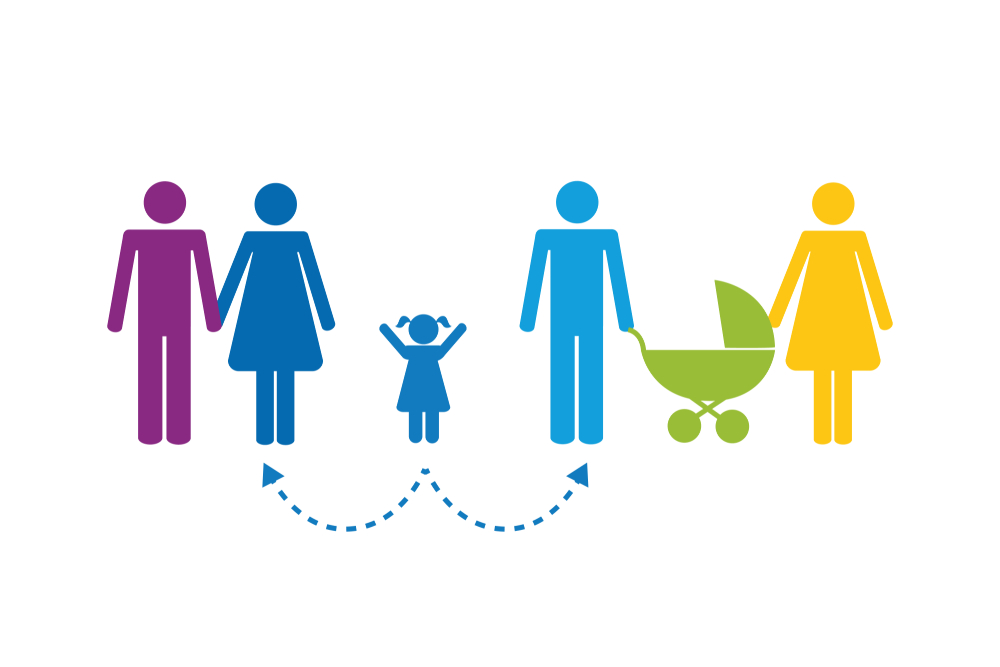
Blended families are increasingly common, and with them come unique joys as well as new beginnings, but they also involve complex emotional adjustments. Children and step-children are asked to navigate shifts in attachment, belonging, and family identity. All of these factors can feel destabilising, without the right support.
Common Challenges
Attachment concerns: Children may feel torn between parents, worried that forming a bond with a stepparent means betraying their biological parent.
Boundary confusion: Different parenting styles or expectations can lead to uncertainty about rules and roles within the household.
Identity and belonging: Step-children may question where they “fit” in the family system, especially if siblings already share a strong bond.
Unresolved grief and loss: The circumstances that led to a blended family — such as divorce or bereavement — may leave children with unprocessed emotions.
Emotional dysregulation: Rivalry or competition between siblings and stepsiblings can trigger anger, anxiety, or withdrawal.

How Therapy Can Help
Psychotherapy provides a safe, non-judgemental space for family members to reflect, process, and reconnect. It can help by:
Facilitating emotional expression: Supporting children in naming and regulating emotions such as sadness, frustration, or jealousy.
Strengthening attachment bonds: Helping parents and stepparents build trust and secure connections with children at their own pace.
Supporting co-parenting alignment: Encouraging consistency in parenting approaches and boundary-setting between adults.
Promoting reflective dialogue: Giving children and adults the chance to share experiences in a contained, therapeutic setting.
Building resilience: Encouraging children to develop healthy coping strategies as they adapt to new dynamics.
Therapeutic Guidance for Parents and Stepparents
Allow space for adjustment: Transition takes time; rushing closeness can create resistance.
Validate emotions: Acknowledge the child’s feelings to reduce shame and encourage self-expression.
Model healthy communication: Show children how to resolve conflict respectfully and collaboratively.
Establish clear boundaries: Consistency helps children feel safe, even when households differ.
Seek professional support when needed: Family therapy can help strengthen relationships and reduce conflict.

Helpful websites