
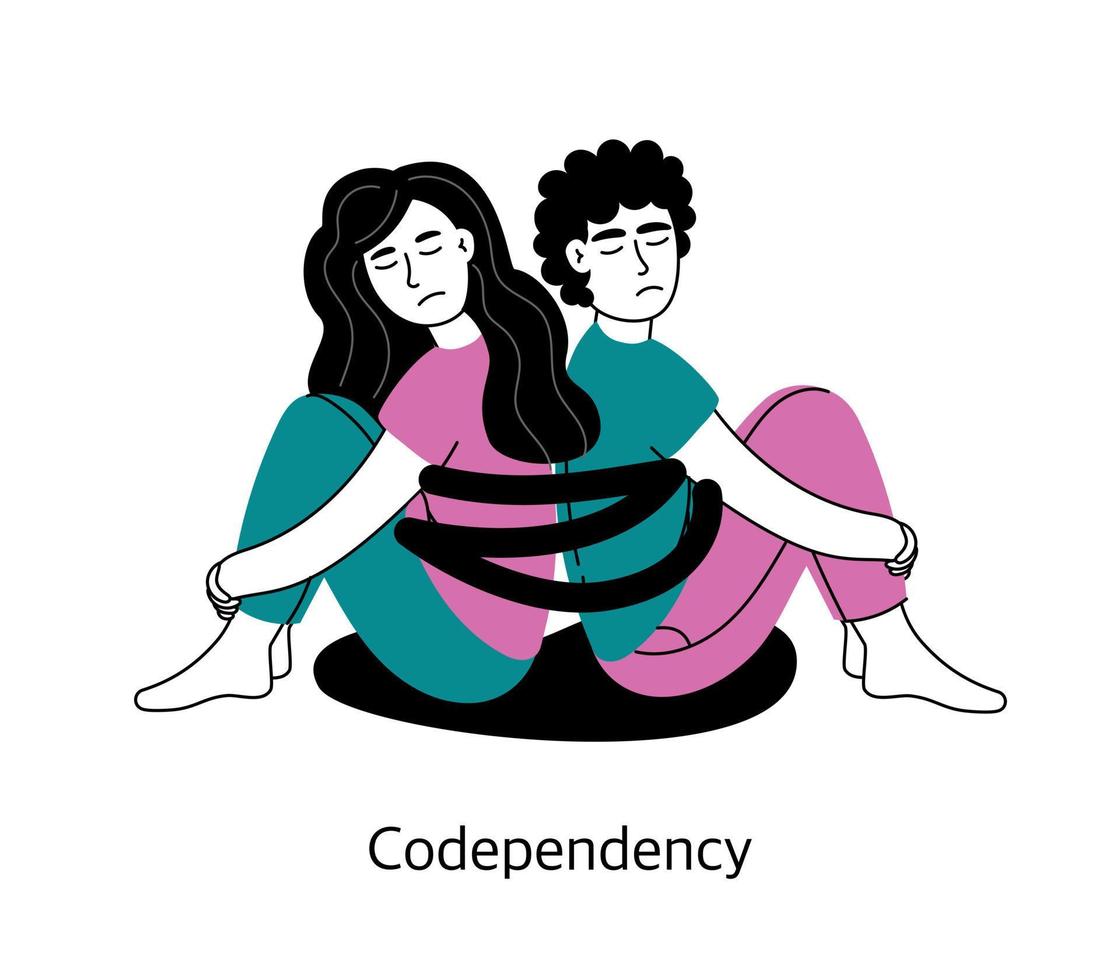
Co-dependency is a term many people have heard but often struggle to fully understand. At its core, co-dependency describes a pattern in which one person’s sense of identity, worth, or emotional stability becomes overly tied to another person’s needs, feelings, or behaviours. It often develops gradually and can feel like caring too much, being the responsible one, or even trying to keep the peace. However, it can lead to exhaustion, resentment, and a loss of authentic self.
What exactly is co-dependency?
Co-dependency typically involves:
Over-functioning: taking on more than your share of emotional, practical, or relational responsibility.
People-pleasing: prioritising others’ needs to avoid conflict, abandonment, or feelings of guilt.
Poor boundaries: difficulty saying no or recognising your emotional limits.
Enmeshment: blurred emotional boundaries, where you feel responsible for another person’s mood or wellbeing.
Low self-esteem: deriving your sense of worth from helping, fixing, or being needed.
Fear of abandonment: staying in unhealthy dynamics due to anxiety about being alone.
These patterns often begin in childhood through early attachment experiences, trauma, neglect, or being raised in environments where emotional expression was unsafe or inconsistent.

How co-dependency affects daily life and relationships
Relationships impacted by codependency often feel unbalanced or emotionally draining. Common experiences include:
Chronic caretaking—feeling compelled to rescue or fix others.
Emotional burnout—experiencing ongoing stress, resentment, or fatigue.
Control and avoidance patterns—trying to manage others’ emotions or behaviour to reduce your own anxiety.
Difficulty expressing needs—worrying that honesty will upset others.
Recurring relationship dissatisfaction—often feeling unappreciated, overwhelmed, or unseen.
Co-dependency can occur in romantic relationships, friendships, parent-child dynamics, or even workplace settings.
Signs that you may benefit from seeking help
You might consider seeking therapy if you notice:
-
You feel responsible for others’ emotions
-
You avoid conflict at all costs
-
You feel guilty when prioritising yourself
-
You repeatedly end up in unbalanced or draining relationships
-
You struggle to identify your own needs, preferences, or feelings
-
You feel resentful but unable to express it
Recognising these patterns is a courageous first step.

How can therapy help?
Psychotherapy provides a safe and non-judgmental space to explore the roots of co-dependent patterns and begin building healthier relational skills. Therapeutic models that can be especially useful include:
Attachment-based therapy—exploring early relational experiences and how they shape current patterns.
Cognitive Behavioural Therapy (CBT)—identifying beliefs that drive people pleasing, self sacrifice, or fear of conflict.
Schema Therapy—working with deep-seated patterns such as the Self-Sacrifice Schema
Internal Family Systems (IFS)—helping you understand the parts of yourself that try to keep you safe by pleasing or rescuing others.
Psychodynamic therapy—exploring unconscious relational patterns and emotional conflicts.
Boundaries and assertiveness work—learning practical tools to communicate needs clearly and confidently.
Through therapy, individuals can gradually develop:
-
A stronger sense of self
-
Healthy emotional boundaries
-
Increased confidence in setting limits
-
More balanced and fulfilling relationships
- An ability to tolerate conflict without losing self-worth
Co-dependency is not a character flaw—it’s a coping mechanism that once served a purpose.The goal isn’t to stop being caring—it’s to care for others without losing yourself.
Useful websites